Celestia TST and SGS have deployed a Smart Warehouse IoT solution to continuously monitor the internal conditions of stored grain using 1,000 devices equipped with temperature and humidity sensors, all connected to an IoT platform. The goal: detect risks early, reduce losses and improve operational management in large-scale agricultural storage.
The Challenge: Reducing Loss and Risk in Grain Storage
In large grain volumes, small deviations in temperature or humidity can accelerate deterioration and cause significant losses. Traditional monitoring and occasional inspections in the industry lack the frequency and granularity needed to anticipate problems, increasing the risk of spoilage and costly corrective interventions.
The Solution: End-to-End IoT for Smart Warehouses
Celestia TST delivered an end-to-end IoT solution designed to digitalise grain supervision and enhance data-driven decision-making. The project evolved from an initial prototype to an optimised device design for production and logistics, combining:
- SGS expertise in grain storage.
- Celestia TST’s design, industrialisation and manufacturing of connected hardware.
- An IoT platform for monitoring, alerts and traceability.
1,000 IoT Devices with Temperature and Humidity Sensors
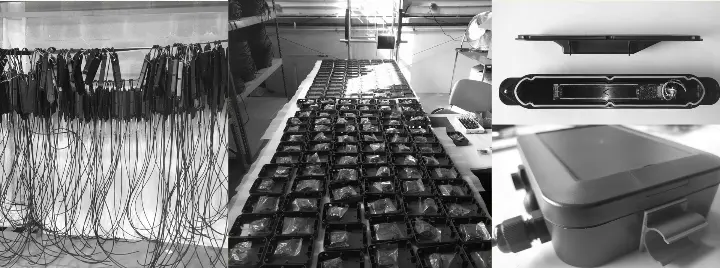
A total of 1,000 units were deployed, designed to operate in bulk storage environments. Each device performs periodic measurements at critical points and transmits data remotely via LoRaWan, enabling continuous tracking of internal grain conditions without relying on physical inspections or one-off measurements.
IoT Platform: Continuous Monitoring and Risk Management
The platform centralises data from all devices and provides an integrated view of Smart Warehouses:
- Visualisation of temperature and humidity trends.
- Configurable threshold-based alerts.
- Identification of risk zones.
- Logging and documentation of actions for more traceable operations.
Impact: Prevention, Efficiency and Data-Driven Decisions
- Significant reduction in grain loss thanks to early detection of risk conditions (temperature and humidity) and the ability to act before problems escalate.
- Clear improvement in operational team productivity by replacing manual inspections and spot checks with continuous monitoring and automated alerts.
- Fewer reactive interventions and corrective treatments, saving time, energy and product.
This architecture allows the model to scale to new warehouses, add advanced alert rules and evolve towards predictive analytics based on historical data. For SGS, Smart Warehouse strengthens its ability to manage grain storage risk and deliver greater value to clients, while for Celestia TST it consolidates a benchmark end-to-end IoT project in the agri-food sector.
Project Details
| Client / Partner | SGS |
| Use CaseCaso de uso | Grain monitoring in agricultural storageMonitorización de grano en almacenamiento agrícola |
| Deployment ScaleMagnitud del despliegue | 1,000 IoT devices1.000 dispositivos IoT |
| Measured Variables | Temperature and humidity |
| Key Capabilities | Continuous monitoring, trend analysis, threshold alerts, traceability of actions |
| Expected Benefits | Less loss, fewer manual inspections, preventive response to risk zones |
Ready to digitalise your large-scale storage?
Let’s design an end-to-end IoT solution tailored to your operation.