The digitalisation of the water cycle faces a critical challenge: guaranteeing data transmission from hostile environments such as underground chambers and basements with very low coverage. This article analyses how TSherpa concentrator gateways, with over 35,000 devices deployed out of a total of 100,000 IoT devices from Celestia TST, have achieved 99.9% delivery rates in water meter remote reading through NB-IoT technology and compatibility with standards such as UNE 82326 and Wireless M-Bus. Experience accumulated across geographical areas including Madrid, Málaga, Tenerife, and Galicia.
What do a basement in Madrid, an underground chamber in Tenerife, and a meter room in Galicia have in common? They are all locations where traditional cellular connectivity faces its greatest challenges... yet where TSherpa has demonstrated functionality with a 99.9% delivery rate.
In the digitalisation of the water cycle, figures mean everything. And when we're talking about over 35,000 TSherpa devices deployed in the field, reliability isn't an option: it's a requirement.
Why remote reading requires robust infrastructure
As Pablo Pelayo Lastra, Head of the Smart Metering Business Unit at Celestia TST, explains: "Smart metering solutions play a central role in the digitalisation of water management because they are the starting point for having accurate, real-time information. It all begins at the meter: without frequent data, there's no intelligent management. If we aspire to hourly readings, manual reading is out of the question."
He adds a crucial nuance about architecture: "In all cases we're talking about intelligent meters, although the 'intelligence' may reside in an intermediate gateway or in a remote platform." This architectural flexibility is key in a market that demands open, integrable solutions, not closed ecosystems.
This reality poses a technological dilemma: how can we guarantee that data arrives consistently from hostile environments such as underground chambers, basements with very low coverage, or installations with multiple physical barriers?
The answer lies in designing the solution from scratch with these real scenarios in mind.
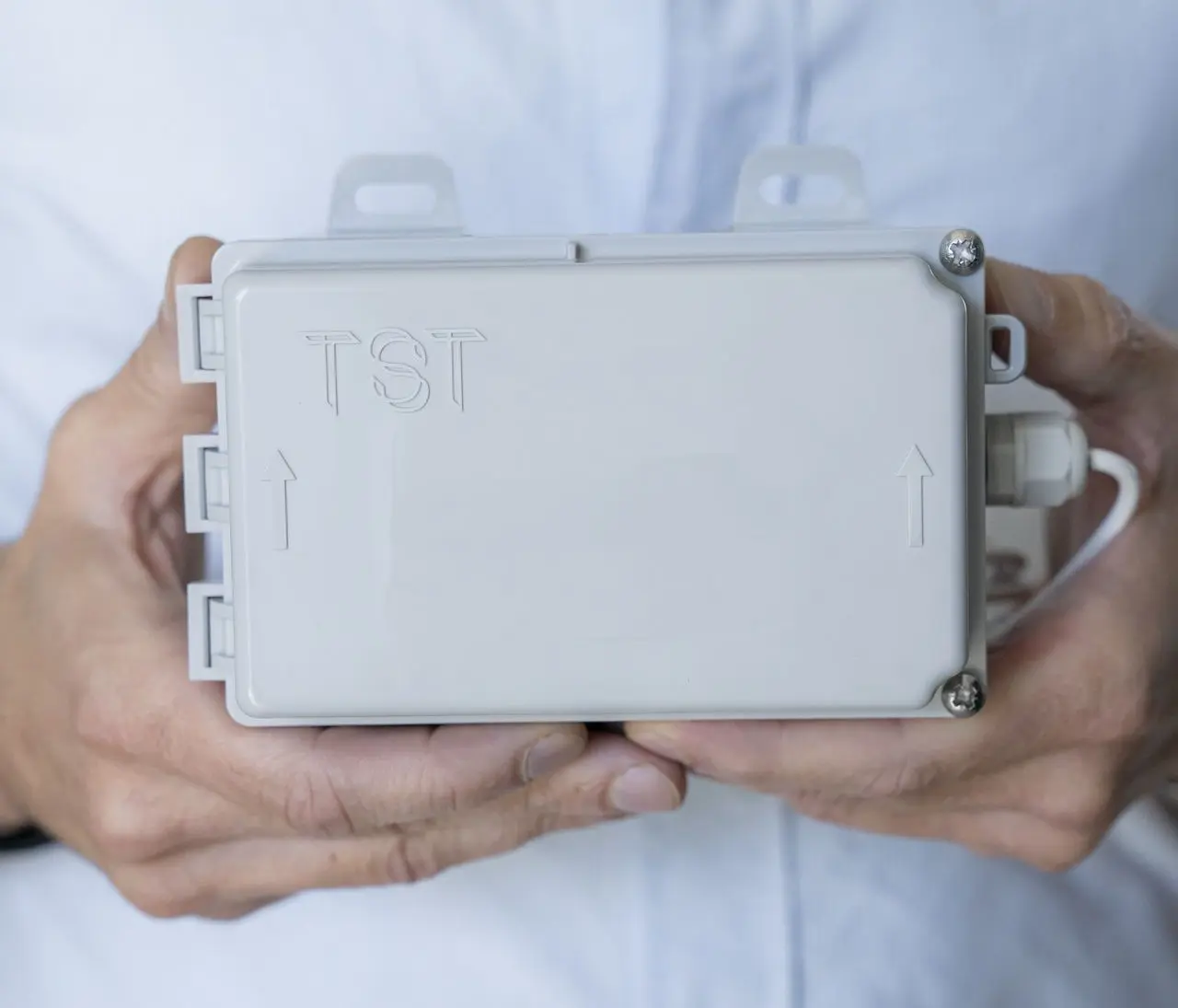
CLAC TSherpa: An IoT Device Designed for the Difficult
Unlike meters with integrated cellular connectivity, TSherpa is a concentrator gateway (CLAC - Concentrator for Automatic Meter Reading) specifically developed as an IoT device to overcome environmental limitations.
What makes TSherpa different?
1. NB-IoT Connectivity Optimised for Penetration
TSherpa utiliza tecnología NB-IoT, diseñada específicamente para entornos de baja cobertura. Mientras que un contador individual con tarjeta SIM puede perder señal en un sótano, TSherpa puede instalarse en una ubicación estratégica con mejor cobertura (incluso a metros de distancia de los contadores) y seguir comunicando con ellos mediante protocolos locales.
2. Efficient Management: 1 SIM for up to 200 Meters
One of the key advantages that differentiates the gateway model is operational efficiency. TSherpa concentrates readings from multiple meters—up to 200 per device—and transmits them through a single SIM card. This drastically reduces:
- Monthly connectivity costs
- Complexity in managing the SIM card fleet
- Maintenance requirements
3. Universal Compatibility with Open Remote Reading Standards
TSherpa connects with existing meters using the sector's most widespread standards:
- UNE 82326: Wired communication protocol for water meter reading as defined by the standard, widely used by multiple manufacturers
- RS-485: Standard wired interface common in industrial and large-calibre meters
- Wireless M-Bus (868 MHz and 169 MHz): Standardised radio communication enabling reading capture in installations where cabling is not viable, offering from short to long range depending on the band
- Open protocols such as LwM2M: Employed for remote management, security, and device supervision, and integration with IoT platforms
This interoperability enables the digitalisation of already-installed meter fleets without needing to replace equipment that complies with open standards, avoiding vendor lock-in and accelerating return on investment.
4. Design for Extreme Environments
As Pablo Pelayo notes: "The gateway is an IoT device designed from scratch to be highly efficient in communications and energy consumption, whilst the meter has its own physical limitations due to size and manufacturing materials. Although there are meters with cellular connectivity that work well in favourable conditions, in more demanding environments—which are the majority—the gateway offers a more robust and sustainable solution."
TSherpa is prepared to function in:
- Meter rooms without ventilation
- Underground chambers
- Basements with electromagnetic interference
- Installations with variable temperature and humidity
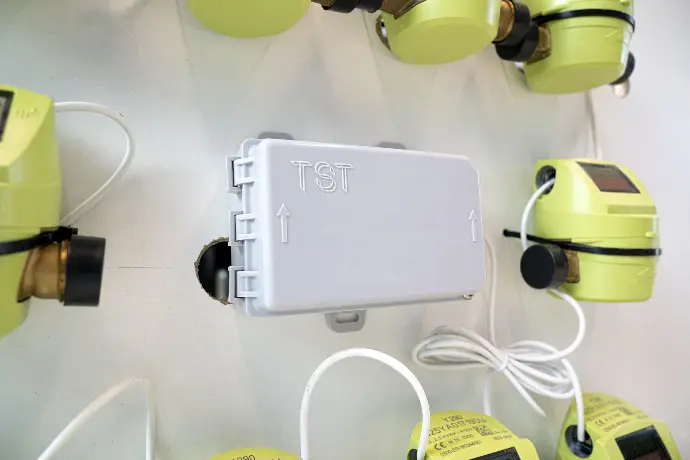
From Theory to Practice: Over 200,000 Meters Monitored
The numbers speak for themselves. Celestia TST has approximately 100,000 IoT devices installed in the field, of which over 35,000 correspond to the TSherpa model, deployed across geographical areas such as Madrid, Málaga, Tenerife, and Galicia, maintaining data delivery rates of 99.9%.
This level of reliability is no accident. It is the result of:
- 18+ years of IoT experience applied to hardware design
- Remote firmware updates that keep devices optimised
- Local diagnostics enabling incident detection and resolution without site visits
- Multiband and multi-operator compatibility guaranteeing connectivity in any region
Complementary Architectures: The Value of Interoperability
Pablo Pelayo explains it clearly: “Different technological options come into play: meters with wired communications, short-range radio, or cellular connectivity, each suited to the environment.”
This vision reflects the reality of the sector: there is no single solution, but rather an ecosystem of technologies that must work together. TSherpa is designed precisely for that: to act as a bridge between existing meter infrastructure and centralised management systems.
When does a gateway architecture make sense?
The answer lies in the deployment characteristics:
Installations with multiple concentrated meters: Residential communities, industrial estates, hospitals, or shopping centres where dozens of meters share a location. In these cases, TSherpa optimises connectivity and reduces operational costs by managing multiple metering points with a single SIM card.
Environments with coverage limitations: Underground chambers, basements, or technical rooms where cellular signal is weak. TSherpa can be installed in a strategic location whilst maintaining local communication with meters via UNE 82326 or Wireless M-Bus.
Heterogeneous meter fleets: When meters from different manufacturers and technologies coexist (wired, radio, diverse protocols). The different variants within the TSherpa family act as a normalisation layer, facilitating unified management without massive replacements.
Projects seeking gradual scalability: The modular architecture allows starting with small pilots and growing without changing the base infrastructure.
The key is not choosing a universal technology, but rather identifying the most suitable solution for each context, always focusing on interoperability, scalability, and efficiency. And precisely for this reason, TSherpa is designed to work with meters from any manufacturer using open standards.
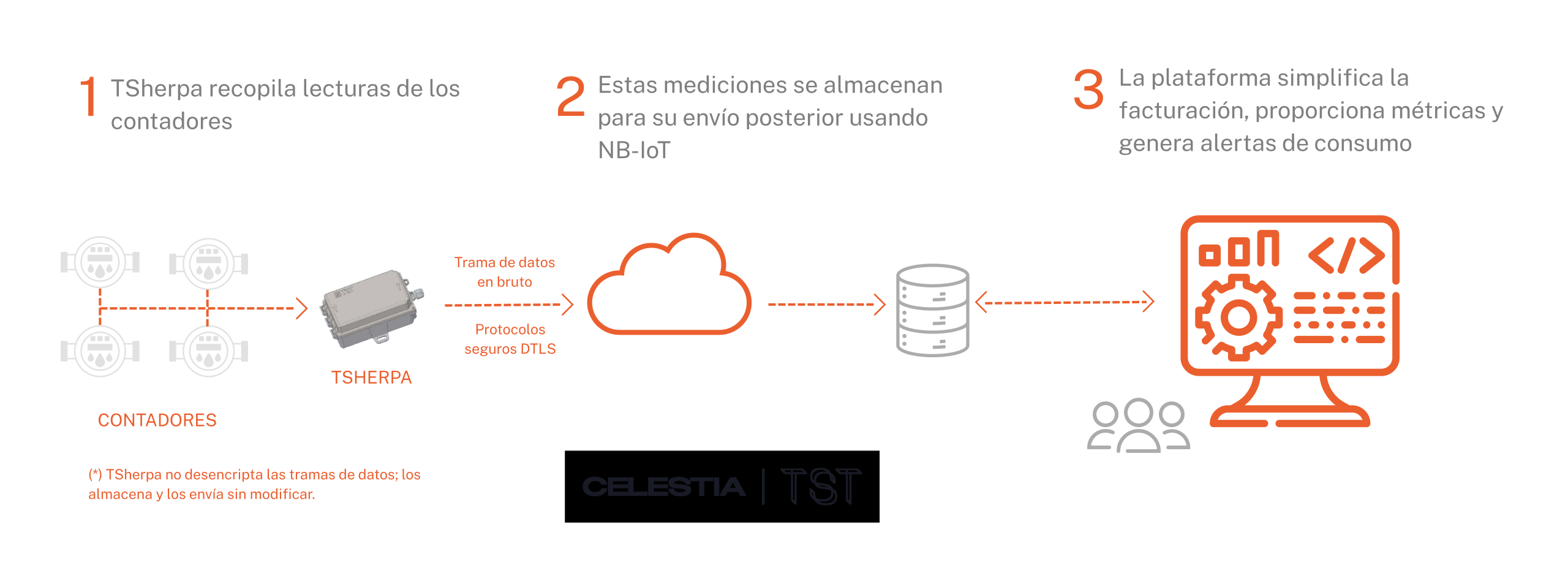
Beyond Reading: Specialisation and Interoperability
TSherpa is not an isolated solution nor a closed ecosystem. It is the specialised hardware component that integrates into existing architectures or forms part of SmartUtility Water, Celestia TST's modular solution:
- Specialised hardware: TSherpa gateways with NB-IoT connectivity and compatibility with multiple standard protocols
- Open API and standard protocols: Integration with third-party platforms via open API, standardised LwM2M protocol, or optimised proprietary protocol, according to the client's preferred architecture
- Managed connectivity: With multiband and multi-operator support
- A truly modular architecture: the customer decides what to integrate—just the gateway, the gateway with managed connectivity, the software platform only, or the complete solution—and which systems to work with.
This philosophy of openness and interoperability responds to a clear market demand: technical specialisation without technological dependencies. As Pablo Pelayo emphasises: "The essential thing is to combine technologies to detect anomalous consumption, activate early warnings, and transfer them to the operator or end user. This would be unfeasible without robust infrastructure, from the meter to mass data management systems, whether proprietary or third-party."
Real Impact: Use Cases Transforming Water Management
Water meter remote reading is not merely a technical advance; it's a paradigm shift in how the most valuable resource is managed:
For operators:
- Early leak detection before they become costly breakdowns
- Automatic billing based on actual hourly consumption
- Drastic reduction in operational costs (no manual readings)
- Real-time information to optimise the distribution network
For citizens:
- Complete transparency regarding their water consumption
- Proactive alerts for anomalous consumption.
- Innovative applications such as preventive monitoring in homes of dependent persons (any anomalous consumption triggers an alarm)
The Future is Modular, Interoperable, and Efficient
At Celestia TST we design and manufacture our own devices in Spain, enabling us to offer proximity, agility, and direct service. But above all, it allows us to adapt technology to the sector's real needs, not the other way round.
TSherpa represents over 18 years of learning applied in the IoT field, condensed into a device that makes the most complex appear simple: guaranteeing that data arrives, always, from anywhere.
Because in the digitalisation of the water cycle, the difference between a solution that works and one that promises to work is measured in a percentage: the 99.9% reliability that only infrastructure designed for complexity can offer.
The TSherpa gateway is specifically designed as an IoT device optimised for communications in challenging environments, whereas a meter has physical constraints due to its size and materials.
Key advantages include:
- Strategic placement: It can be installed outside manholes or basements, in areas with better mobile coverage.
- Energy efficiency: A purpose-built design that extends battery life.
- Simplified management: A single SIM can manage up to 200 meters, reducing operational complexity.
- Robust communications: It achieves data delivery rates above 99.9% even in adverse conditions.
No. TSherpa follows an openness and interoperability approach. It can be integrated with:
- Third-party management systems via an open API and standard protocols such as LwM2M.
- Celestia TST’s SmartUtility Water platform.
- Hybrid architectures where the customer decides which components to integrate.
This flexibility avoids technological lock-in and allows customers to work with the systems they already use or prefer.
Frequent remote meter reading transforms water management in several ways:
For utilities and operators:
- Early leak detection before they cause significant losses.
- Automated billing based on actual consumption (eliminates manual readings).
- Analysis of consumption patterns to optimise the distribution network.
- A drastic reduction in operating costs.
For end users:
- Full transparency of real-time consumption.
- Proactive alerts for anomalous consumption.
- Value-added applications such as preventive monitoring in the homes of dependent or vulnerable people.
Yes. One of TSherpa’s main advantages is its compatibility with existing infrastructure. It can connect to meters from any manufacturer that uses open standards such as UNE 82326 or Wireless M-Bus, without the need to replace equipment. This speeds up return on investment and enables gradual digitalisation without invasive works.
Ready to digitalise your water infrastructure with 99.9% reliability?
Contact our technical team and discover how TSherpa can adapt to your specific project requirements.