
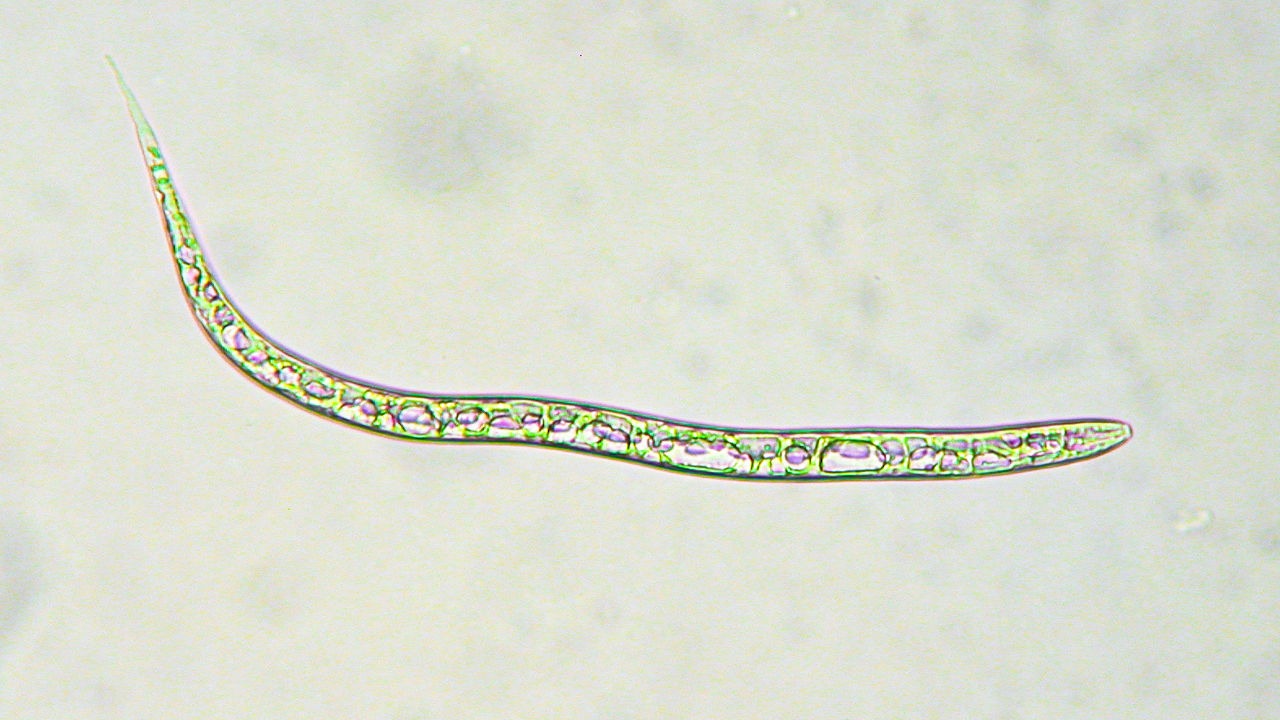
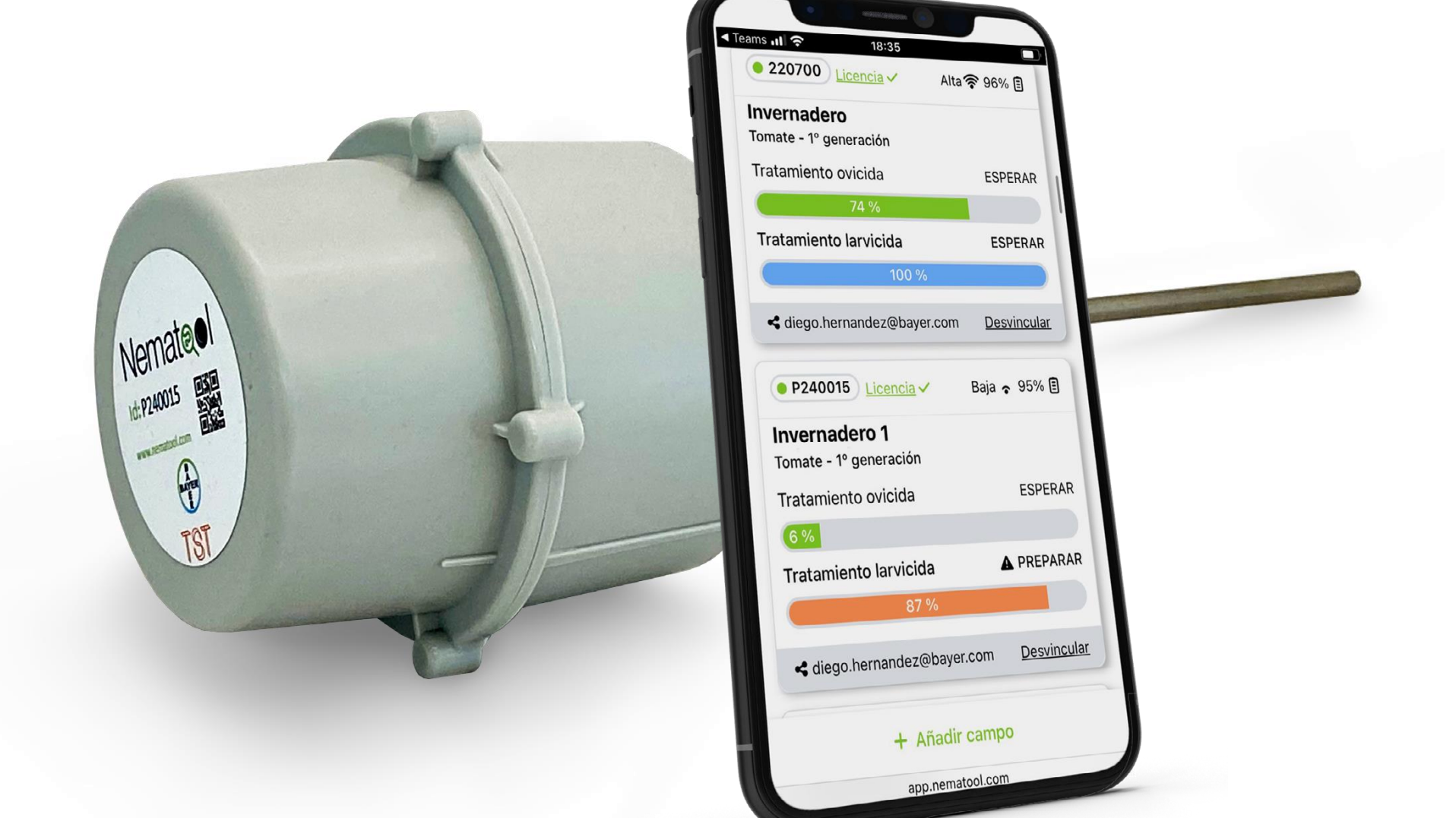
The collaboration between Celestia TST and Bayer Crop Science has enabled the deployment of an intelligent IoT soil temperature probe that monitors greenhouse conditions in real time to optimise eco-friendly treatments against nematodes—microscopic worms that live in the soil, some of which are agricultural pests capable of damaging roots and reducing crop productivity—within Bayer’s digital solution, Nematool.
Thanks to this technology, based on IoT sensing and Machine Learning algorithms, Celestia TST devices have been successfully deployed in greenhouses across four continents, helping farmers anticipate pest outbreaks and apply treatments at the critical stage of the nematode’s life cycle.
Client and Challenge: Reliable Soil Temperature Data for Agronomic Decisions
Bayer Crop Science needed a precise, automated and scalable way to measure soil temperature in greenhouses to improve the effectiveness of its biological treatments against nematodes.
The goal was to predict the nematode’s most vulnerable phase using real field data, avoiding late or less effective treatments and reducing reliance on chemical solutions.
The Solution: IoT Soil Temperature Probe Integrated into Nematool
Celestia TST developed a dedicated IoT probe for agricultural environments that:
- Measures temperature at around 20 cm depth (the critical zone for crops).
- Transmits data wirelessly on an hourly basis.
- Feeds Bayer’s digital platform so Nematool can clearly recommend the optimal treatment time.
Technology and Methodology: IoT Sensing and Predictive Analytics
The solution combines:
- Robust IoT sensors for greenhouses (continuous and reliable operation).
- Wireless connectivity to send data to a cloud-based IoT platform.
- Machine Learning to correlate soil temperature trends with the nematode’s biological cycle, enabling predictive analytics and preventive planning.
Results: Smarter, More Sustainable Agriculture
- Real-time information on soil thermal conditions and associated nematode risk.
- Treatment optimisation: applied only when truly necessary and at the key stage.
- Proven scalability: deployments in greenhouses across four continents.
- Sustainability impact: supporting biological control strategies and reducing inefficient interventions.
Nematodes have a phase in their biological cycle when they are most vulnerable to treatment, and that phase depends on soil temperature. An IoT probe measures that temperature in real-time at the critical depth of the crop and feeds a model that predicts the optimal intervention time. This way, treatment is applied when it is truly effective, rather than being late or repeated unnecessarily.
The probe measures around 20 cm deep, which is the critical zone for the crop, and transmits data wirelessly every hour. This combination of measurement point and frequency provides a reliable reading of the actual soil conditions, without relying on one-off manual measurements.
Yes. By predicting the vulnerable phase of the nematode with real field data, treatment is applied only when necessary and at the key moment, which avoids late or ineffective interventions. The approach reinforces biological control strategies and reduces unnecessary interventions, with less reliance on chemical solutions.
Take the next step towards more sustainable, efficient agriculture.
Share your challenge and let’s design your bespoke agricultural IoT solution together.

Written by Ana Escalante Galán, Head of Marketing and Communications at Celestia TST

Technical review: Alberto Puras Trueba, Business Development and Innovation Management.