
IoT has matured. A decade ago, the challenge was connecting things; today, connectivity is taken as a given by anyone who has worked on an IoT project. What separates success from pilot purgatory is not the device, but what happens next: how data integrates with the systems a company already uses (ERP, MES, BI), what operational decisions it enables, and whether there is someone on the phone when something stops working.
This shift of context is what has shaped our new proposal. Celestia TST is the European partner for comprehensive IoT that transforms technological complexity into measurable impact, with proprietary hardware, real integration with the client's systems, and a responsive team. The device is the entry point. The value lies in what sits behind it: the data, the platform, the integration with the client's systems, and the support.
Three attributes underpin that promise: adaptability, trust, and proximity. We have not choose them just in a meeting room: we validated them against feedback from our active clients, a market analysis, and the team's own perspective.
This article explains what each of those attributes means in practice, what space Celestia TST occupies in the IoT market, and how all of this translates into each of our three priority business units: NivelWatcher, Nébula Energy and SmartUtility Water.
Three attributes validated by the voice of the customer
Interviews with active customers (companies that have been working with us for years, not prospects) such as Michelin, SULO Ibérica, Honeywell, Propenor, Hidroconta, or Mercavalencia provided three data points that should be read together: a Net Promoter Score (NPS) of +50, considered excellent in industrial B2B; an average satisfaction of 8.7 out of 10; and no detractors.
Beyond the numbers, what mattered was what they said in their own words. Three attributes were repeated in almost every all conversations.
Adaptability. Clients describe Celestia TST as a company that adapts to their systems, not the other way around. If their current operations work, the solution fits in without disruptions. If what they seek is to improve processes, it is designed in that direction. The technology adapts to the client's reality.
"They demonstrate flexibility to adapt to the specific needs of the project (smart bins in Madrid) and maintain an open attitude towards collaboration," notes Ignacio Gañán from SULO Ibérica.
Trust. Products that work from day one, reliable data, fulfilment of promises. It is demonstrated trust, not promised: the customer can make business decisions based on what they see.
"It is a company you can trust. What it has provided me is the ability to have a proven solution that I trust," highlights Miguel Ruano, Director of Innovation Space at Michelin Aranda.
Proximity. When there is a problem, the customer knows who to call and gets a response. It is not a ticket in a system, it is a conversation with someone who knows their installation.
“Proximity, as they are in Santander. And you know the people you work with,” comments Raúl Blanco, sales representative of Propenor.
The gap that the large integrators and vertical specialists do not cover
The market has polarised into two extremes. On one side, the large integrators, with scale and brand, but third-party hardware and rigid solutions. The customer is more a number in their portfolio than a name with a specific project. On the other side, the vertical specialists, with highly refined products but limited to a single niche, with limited ability to integrate with ERP or MES and dependent on external manufacturers for the device.
Between the two, there is a gap that Celestia TST has filled, thanks to four capabilities that few integrate and we do:
In-house hardware manufactured in Europe, which eliminates dependence on third parties. More than 330,000 devices deployed in 10 industries back this capability.
Real integration with ERP, MES and BI, which generates measurable impact on business operations.
Multi-vertical capability with a common technological base: IoT solutions that the customer can use on our NebulaLink platform or integrated directly into their management systems.
Backed byCelestia Technologies Group, with a presence in defence, space and critical systems.
The large players have the scale, but not the hardware. The specialists have the product, but not the integration. Celestia TST has both.

Three solutions, one way of working.
Corporate positioning is the foundation, but in day-to-day business, we need to talk about concrete solutions to specific problems. These are the three lines we are prioritising, each with a dedicated person who knows it inside out:
NivelWatcher: level monitoring for diesel distributors
NivelWatcher monitors and predicts the diesel consumption of each end customer so that the distributor can anticipate demand before the order ever comes in. It automates replenishment, optimises route planning, and eliminates reactive call-outs. It does this with its own ultra-efficient devices, which can be installed in any tank in less than a minute and start sending data from the very first moment, regardless of geometry or location. The platform is configurable, integrates with the client's systems, and offers configurable access profiles, including access for the end customer.
"A fuel distributor that operates by managing emergencies has an information problem, not a logistics problem. NivelWatcher turns every tank into an early warning, and reactive becomes proactive," says Alberto Puras, head of NivelWatcher.
Nébula Energy: energy monitoring for multi-line factories
Nébula Energy consolidates all energy data from the plant in a single point to detect unproductive consumption and control costs by machine and line. No construction work, no dependencies, operational in weeks. It is designed for mid-sized multi-line factories and SMEs with fragmented OT/IT infrastructures, where sensors, PLCs, SCADA, and meters coexist without communicating with each other. The solution connects them to each other and with the ERP and BI that the client already uses, without replacing anything. It is hardware-agnostic and is complemented, when needed, with a primary LoRaWAN layer that requires no cabling.
A factory cannot afford a twelve-month IoT project. What it needs is to see real consumption, machine by machine, within a matter of weeks — and connect that data to the ERP or BI it already has. That is what Nébula Energy delivers", says Iván Bermejo, head of Nébula Energy.
SmartUtility Water: reliable remote metering for water network management
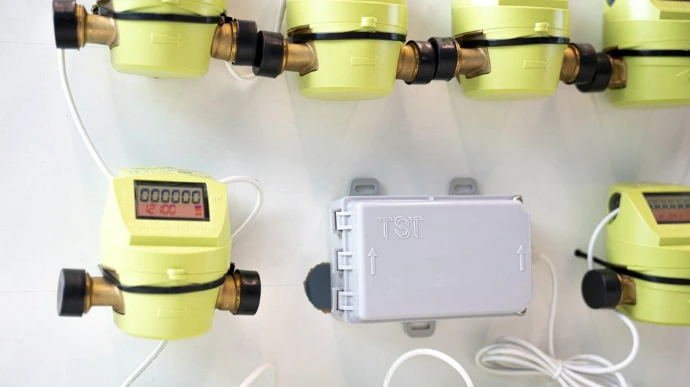
SmartUtility Water turns any traditional meter into a smart data point — without replacing it and without changing the existing infrastructure. It is aimed at network operators, meter manufacturers, and large water consumers that need to work from real data (not estimates) from day one. The TSherpa gateways play a central role: they consolidate and reliably transmit readings to whichever platform the client prefers — their own or ours — and that data is translated into actionable alerts, clear consumption visibility, automated billing, and early leak detection. These IoT devices communicate where others cannot reach (basements, inspection chambers, areas with minimal signal), can handle up to 200 meters each, offer more than 12 years of battery life, and operate on open standards. No vendor lock-in, no platform dependency..
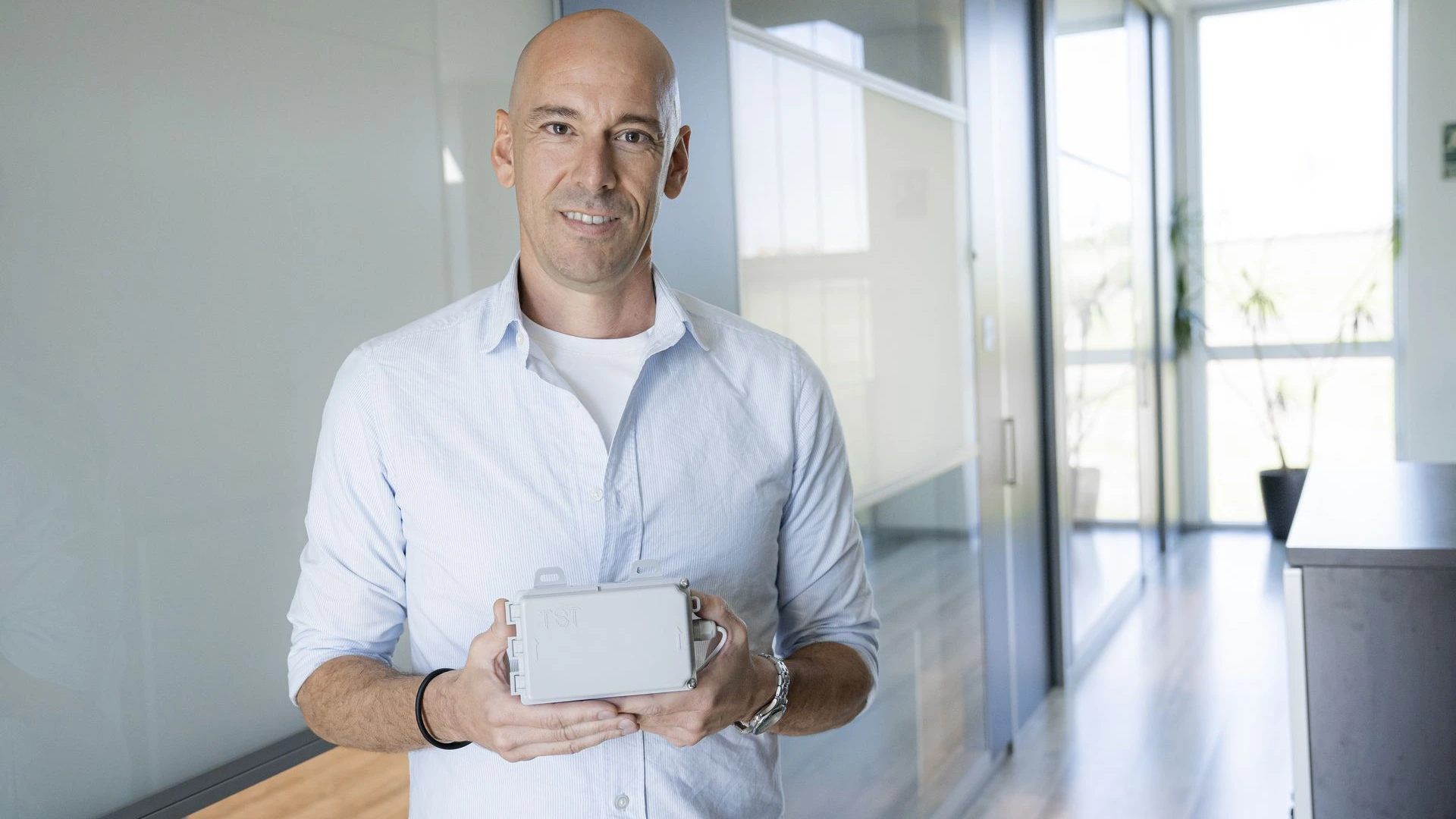
"Network operators need data, not estimates. TSherpa delivers it reliably, even from basements and inspection chambers — and it breaks the one-meter, one-SIM rule: a single gateway connects dozens of meters without replacing the existing installed base," says Pablo Pelayo, SmartUtility Water lead.
Three different sectors. The same DNA.
Proprietary hardware built for a specific purpose and adapted to the client's context; reliable data from day one; and an accessible team when a response is needed. The context, the metrics, and the stakeholders change. The way of working does not.
What does this mean if you work with Celestia TST?
It means, to begin with, a different conversation from day one. You will not receive a closed proposal that forces you to adapt your systems and processes: you will talk to a team that understands your operations and designs the solution around them.
It also means predictability. When we deploy a project, the data arrives from day one and is reliable, not after months of adjustments. And when something doesn't work as it should, you know who to call. You open a ticket, but you also speak to someone who knows your project.
And finally, it means that you pay for a result, not a device. The investment is justified when the data enters your management systems, improves an operational decision, and translates into savings or revenue.
"After almost two decades in IoT, what we have learned is simple: an IoT project does not fail because of the technology. It fails when there are too many pieces and no one is accountable for the whole. That is why at Celestia TST, a single company takes care of everything: from the idea to deployment, including design, manufacturing, and integration," concludes Fran Alcalá, CEO of Celestia TST.
Celestia TST is a Spanish comprehensive IoT company based in Santander. It designs and manufactures its own hardware (level, water, and energy sensors), operates the platformNebulaLinkand integrates that data directly with the client's ERP or MES. Founded in 2007, it is part of Celestia Technologies Group, a European group with a presence in defence, space, and critical systems.
It means that the manufacturer designs and produces its own sensors and devices, rather than reselling third-party hardware. This eliminates dependence on external suppliers, allows control over the product lifecycle (firmware, support, and spare parts), and adapts each device to the actual needs of the customer. Celestia TST has been manufacturing its IoT hardware in Europe since 2007.
Large integrators provide scale and brand, but they do not manufacture their own hardware and customise little: the client ends up fitting into a standard solution. Celestia TST combines its own hardware, its own platform (NebulaLink) and integration with the client's systems, with a technical team that responds directly. The result is a partner that knows your business and responds with a closeness that a large integrator does not offer.
Vertical specialists have a finely tuned product for a single niche, but they do not integrate with the customer's ERP or MES and do not cover multiple verticals. Celestia TST operates with the same technological base across different sectors (waste, water, energy, industry) and delivers the data already integrated into the customer's operating systems, not as a separate panel.
This means that the data from the sensors does not remain in an isolated platform: it enters directly into the ERP, MES or dashboard that the client already uses to operate. Connecting devices to the cloud is just the starting point. Real integration comes when that data modifies specific decisions on maintenance, route or consumption, without forcing the client to change their internal processes.