
Most IoT providers do not manufacture what they sell. They buy devices from third parties, configure them, and resell them within a package. It works until the project goes off track, and in industrial IoT, it frequently does.
If you are evaluating providers for a project, this guide helps you distinguish the three models you will find in the market, see where the difference is noticeable when the project meets reality, and know what to ask before signing.
What is meant by "proprietary hardware" in IoT
There are three common models in the market.
The pure integrator selects devices from different manufacturers and assembles them into a solution. It provides system knowledge and connectivity capability, but does not control the device: if something fails or needs adjustment, it depends on the original manufacturer.
The closed manufacturer sells its own hardware, but with locked firmware and little willingness to adapt it to specific cases. It controls the product, but offers it as is.
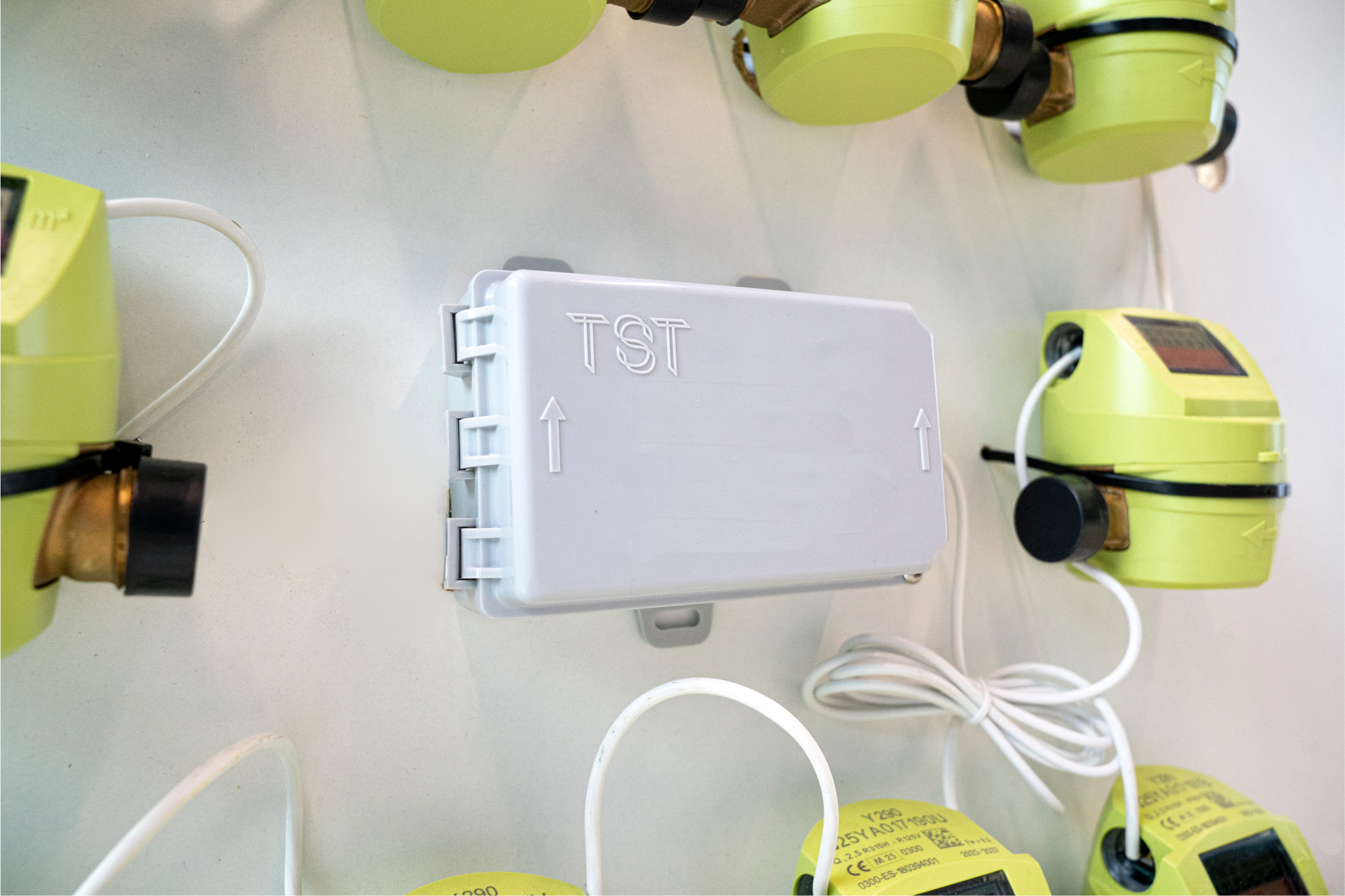
The integrating manufacturer, which is the model of Celestia TST, designs and produces its device, and also connects it with the client's systems. It controls both layers: the device that captures the data and the path that data takes to the ERP or BI. It is the approach behind the comprehensive European IoT partner model that we apply.
The difference is not marketing. It is who can touch the firmware when a requirement does not fit.
When it matters to have your own hardware
1. When a requirement appears that was not in the specifications
In industrial IoT, it is rare for a project to come out exactly as drawn. A tank appears with a geometry that confuses the sensor, a building without coverage where it was assumed, or an old machine that does not expose the data as it should.
Whoever manufactures their device adjusts the firmware, changes the measurement mode, or adapts the electronics to the case. Whoever resells a third-party product opens a ticket and waits. That is the line that separates a project that is resolved in weeks from one that gets stuck in the support chain of the original manufacturer. Accumulated experience weighs: more than 330,000 devices deployed in 10 sectors provide a margin of manoeuvre that a reseller does not have.
2. When the data has to reach a specific place
A sensor that measures very well but leaves the data on a closed platform solves half the problem. The value appears when that data enters the ERP, the BI, or the management system that the company already uses.
Controlling the hardware facilitates that path, because the same provider decides how the information comes out of the device and how it integrates afterwards. There is no need to negotiate with a third party's firmware to achieve the format or frequency that the integration needs. This is precisely the area where it makes sense to design, manufacture, and integrate the project from start to finish: a single responsible party for the entire chain, from the device to the useful data.
3. When the project has to last for years
An industrial IoT deployment is not a one-off purchase, it is an infrastructure that operates for years. During that time, regulations change, the installation is expanded, or a management system is replaced.
Whoever manufactures the device can maintain it, update it, and evolve it. Whoever resells it may be left without support if the original manufacturer discontinues the product, something that is beyond their control.
A real example: knowing how much diesel each truck consumes
NivelWatcher measures the level of the tank and transmits the data according to a configurable schedule to suit each customer: three times a day, once a week, more in peak season and less in summer. For most installations, that is sufficient. But there are operations where the important data does not occur at a fixed time, but when something happens.
The problem. A transport, public works, or agricultural company with its own bulk tank knows how much diesel it buys and how much it has left. What it does not know is how much each truck has consumed. And that is the figure that allows the detection of the vehicle with diverted consumption, the driver with room for improvement, or fuel theft. The usual solution (a pump with a flow meter and access control) works, but it involves investment, civil works, and one more piece of equipment to maintain.
Personalisation. Instead of adding infrastructure, the behaviour of the already installed device is modified:
- Before refuelling, the driver opens the app and selects their vehicle.
- The mobile connects to the LevelWatcher via Bluetooth and requests a measurement.
- The driver refuels as normal.
- When finished, the app requests a second measurement and ends the session.
The difference between the two measurements is attributed to the vehicle, with time, driver and, if desired, mileage. At the end of the month, the fleet manager has the consumption distributed by vehicle and driver. Without a flow meter, without construction, without wiring anything: the tank and the sensor are the same, only the way the equipment responds changes.
Its limits. The fuel needs a few minutes to stabilise after the transfer, and the app waits that time before giving the reading. Additionally, a very small refuelling in a very large tank may fall below the reliable threshold; in that case, the system warns instead of returning a false figure. That is why it is an internal control tool, not a basis for billing third parties.
Why it is possible. Because NivelWatcher was designed to be modified. Firmware, platform and app are proprietary developments of Celestia TST, and updates are deployed remotely on already installed equipment. When a client requests something that the standard solution does not cover, the question is not whether it can be done, but whether it makes sense to do it.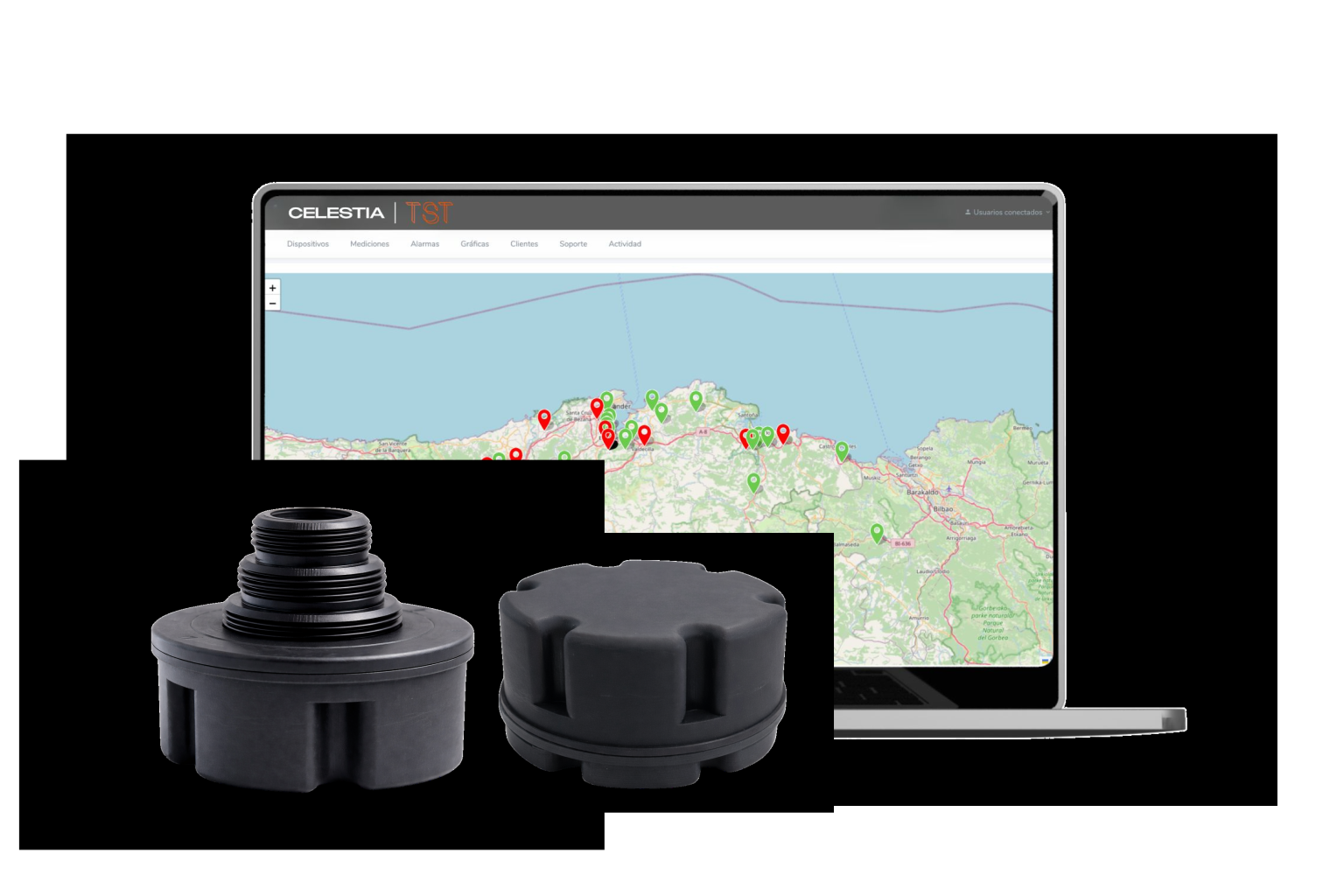
What to ask before choosing an IoT provider
If you are evaluating projects, these questions help to distinguish a manufacturer from a reseller:
- Do you design and manufacture the device yourselves, or do you buy it from a third party?
- If an unforeseen requirement arises, can you adjust the firmware or do you depend on the original manufacturer?
- How do you integrate the data into our current ERP or BI?
- Who will maintain the device in five years?
The answers say much more than any technical sheet.
Proprietary hardware as a base, not as an end
Having proprietary hardware is not a goal in itself. It is what allows each project to be adjusted to the client's actual operations, integrate the data where it needs to be, and sustain the installation over time. It is the technical condition that makes adaptability possible.
At Celestia TST, we design and manufacture our devices, and we integrate them with the systems that each company already uses. Since 2007, we have been working this way, with a simple idea: technology adapts to your operations, not the other way around.
FAQs about proprietary hardware in IoT
It is the model in which the provider designs and manufactures its own devices, instead of buying them from third parties and reselling them. It allows them to modify the firmware, calibrate the sensor, and adapt the electronics to each project. This is the difference with a pure integrator, who selects and connects devices from other manufacturers but does not control the product: if an adjustment is needed, it depends on the original manufacturer.
Because industrial projects almost never go as planned. Difficult geometry tanks, buildings without coverage, or old machines that do not expose data well appear. With proprietary hardware, these cases are resolved by adjusting the device. With third-party products, the solution depends on the original manufacturer releasing an update.
It does not guarantee it by itself, but it makes it much easier. When the same provider controls the device, they decide how the information is output and in what format, without negotiating with a third party's firmware to achieve the frequency or data structure that the integration requires.
Four questions separate a manufacturer from a reseller: whether they design and manufacture the device or buy it; whether they can adjust the firmware in response to an unforeseen requirement or rely on a third party; how they integrate the data into the current ERP or BI; and who will maintain the device in five years.
Do you have an IoT project in mind?
Write to us and we will assess it with you.

Written by Ana Escalante Galán, Head of Marketing and Communications at Celestia TST

Technical review: Alberto Puras Trueba, Business Development and Innovation Management.